

What is the Meta Andromeda? – a question that gets on every founder’s mind the moment Meta’s optimisation layer starts acting up – becoming more independent, more outcome-focused, and far less willing to put up with subpar creative work, weak funnels, or noisy data. At Karma Media, we see Meta Andromeda as a way of thinking, a conceptual model that outlines the next phase of Meta’s AI-driven ad delivery environment – where returns outweigh advertiser preferences. And this shift is becoming pretty clear in Facebook Ads accounts all over Australia – some of the service businesses even start searching for Meta ads agency in Canberra whenever they are struggling to make sense of this new landscape.
This shift is important because now performance is all about quality of data, consistency of funnels and keeping things structured – rather than relying on the next big campaign trick. The system is rewarding broad targeting, behavioural signals, while punishing volatility and inefficiency.
Why This Framework Matters For Growth Operators
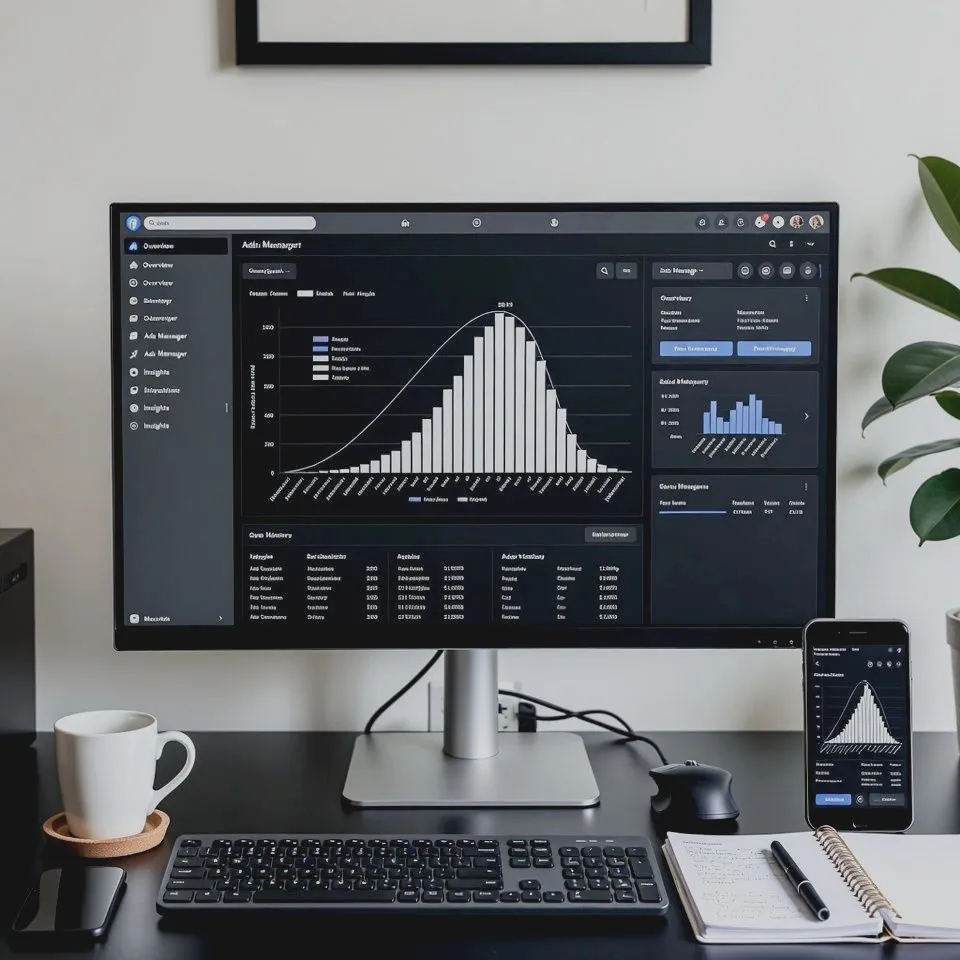
The Meta ad delivery system has moved from being responsive to being predictive, and Andromeda represents the convergence of three pretty powerful forces:
- AI-driven optimisation system: Meta’s algorithm behaves like a trained model, figuring out how to allocate spend based on patterns in user behaviour and actual performance data.
- Outcome prioritisation: The system is now optimising for actual results – revenue outcomes – over vanity metrics like click-through rates on their own.
- A sensitivity to signal quality: Weak data is a poison – it’s only strong data that compounds the scale.
Founders who are working with Karma Media often tell the same story: they feel like the system has gone off the rails, and that’s because it has. Andromeda is behaving like a maturing AI-driven model, not a straightforward ad system.
A little tip to keep in mind: eta ads agency in Canberra up quite often in our experience when founders are trying to get their ad accounts back under control.
The New Operating Logic Behind Meta’s AI
Rather than relying on manual audience targeting or demographic segmentation, the system now uses those big patterns in user behaviour to figure out:
- Who are the buyers you can actually reach
- How quickly can you scale up your efforts
- What CPMs are the behaviour of your best customersactually going to get
This predictive engine weighs up all sorts of user data – behaviour, engagement with content, consistency of landing pages, time spent on the page, and diversity of creative work – to forecast future value. It is a world away from the old “launch and tweak” era.
Layer 1 — Demand Modelling (Cold Traffic Economics)

Andromeda identifies which users will deliver high-value results, rather than just clicks. It takes all the user data, behavioural signals, and previous conversion history into account to determine which ad impressions make it into your auction.
Broad targeting almost always outperforms super-tight demographic filters because the system has a better handle on your audience than you ever could by manually setting up some specific targeting option.
A lot of the audits we do at Karma Media show that when advertisers force in demographics, they’re basically sabotaging Andromeda’s ability to identify who will be valuable.
Layer 2 — Funnel Predictability
Andromeda loves reliable funnels. Not the ones that look pretty. Reliable funnels.
If your landing pages are converting at 2.4% one day and 0.9% the next, Andromeda starts to lose trust in your sales pipeline and cuts back on ad delivery. And no amount of throwing more money at it is going to sort out the problem.
Most of the time when your performance goes through the floor, it’s because – whether it’s your content, your your dwell time or the ads you’re serving up – you’re somehow not giving people what they want. And when you get your funnel stabilised, delivery stabilises too.
Some brands in Canberra are specifically looking for a meta ad agency because they’ve been dealing with highly unpredictable CAC (cost per acquisition) for months, and their funnel just isn’t consistent.
Layer 3 — Creative-to-Signal Alignment
The system is constantly checking whether your ad creatives match the behaviour of your best customers. If you’re using creative variations that attract users who aren’t even thinking about buying, your CPMs go up, and delivery slows down again.
You can’t just ‘have a go’ at creative with Andromeda. creative with Andromeda. Ad Creatives are essential.
The AI-driven system’s job is to pick out visual styles that are more likely to elicit a reaction from users, and ad proof that comes from people you want to be like. And it needs you to be consistent with your ad assets so that it knows what to expect. At Karma Media, we build creative pipelines specifically with these new optimisation needs in mind.
How This Shift Restructures Modern Campaign Architecture

A disciplined account structure becomes a competitive advantage because it reduces noise and strengthens predictability. Sloppy setups confuse the AI model, inflate per-action costs, and degrade data integrity.
Below is the acquisition structure Karma Media deploys consistently inside Ads Manager.
Funnel Stage Objective Strategic Focus Signals Used
Cold AI Prospecting Sales / Advantage+ Broad targeting, creative diversity AOV, LTV, purchase data
Warm Engagement Layer Landing Page Views / Sales Social proof, strong ad creatives Dwell time, scroll depth
Hot Intent Layer Sales Clear offers, minimal friction Checkout events
LTV Expansion Retention Personalised messaging, bundles Repeat purchase sequences
This setup works because it simplifies the signal environment and gives the model the behavioural clarity it needs to scale.
Creative Strategy
The AI system’s now acting like a smart selector – it tests creative assets, takes a close look at user behaviour, and gives top billing to ad creatives that deliver strong long-term value. Usually, the ones that do best have 5 key qualities:
- They get straight to the point with a clear problem-solution idea
- They’ve got authentic social proof that people can actually trust
- They fit in with the kind of content that people are already interacting with
- They use visual styles that really resonate with the platform
- They come in a variety of styles – not just one shot and hope for the best
CTR, video views, and content engagement are still worth paying attention to, but only as a bonus. The real key to success is how well each creative variation aligns with the groups most likely to act.
Scaling in the Modern AI-Optimised Environment

Scaling isn’t about throwing more money at things anymore. It’s about earning the system’s trust. The model only ramps up spending when it’s pretty sure the future revenue‘s going to be okay.
The indicators that’ll unlock some decent scaling include:
- A stable 7-day CAC
- Predictable purchase values
- Creatives that can keep going for a long time, thanks to some decent variation
- A strong monetisation cycle in the background
When those signals get stronger, scaling gets cheaper – and when they go downhill, it gets a lot more expensive.
Karma Media waits until those indicators stabilise before scaling – not before. This is why our accounts scale smoothly, while others just burn through cash.
What Breaks When Founders Scale Too Soon
Across accounts that are spending $50k to $300k every month, the same problems pop up time and again:
- CPMs rise because the model must compensate for uncertainty.
- Costs per action rise because the creatives aren’t varied enough.
- Click-through rates drop as creatives become stale.
- Landing pages fall over under the volume because they weren’t designed to handle it.
- Delivery slows right down because the model restricts distribution to prevent it all getting out of hand.
Those aren’t “glitches” – they’re the system just trying to keep its prediction accuracy on track.
The Margin Equation That Determines Survival
Scaling comes down to a margin problem at the end of the day.
If your business can’t handle:
- Higher CPMs
- Creative fatigue is going into cycles
- Fluctuations in attribution
- The funnel is tightening up because of the pressure
Then you’re not scaling – you’re eating into your margins.
Businesses that win out in this new world tend to have:
- High repeat purchase rates
- Clear, stable user behaviour patterns
- A steady supply of new creative ideas
- Landing pages that can handle the traffic
- A reliable way to monetise after the sale
Karma Media builds those things in before we even think about scaling.
Attribution and Reporting in the Current Landscape
Attribution has become a numbers game, a shot-in-the-dark exercise in which our models try to figure out what’s driving the action. Instead of looking for that elusive 1:1 “cause and effect” link, our model is now digging into the entire sequence of events that get people moving.
Practical operators – you know, the ones who have to get things done – now rely on:
- MER as a primary economic indicator
- 30–60 day analysis windows
- Funnel staging, not campaign-level snapshots
- Deep behavioural patterns rather than last-click
The guys and gals who are smart enough to adapt to this new way of thinking are the ones who scale consistently. Meanwhile, the ones who are stuck on daily ROAS and still trying to squeeze out that last bit of spend – they’re just going to be in a panic every time the platform decides to reallocate their ad spend.
The Karma Media Operating Standard
At Karma Media, we view Facebook Ads not just as a platform to dump money into, but as a serious capital allocation engine that’s powered by an optimisation model that’s still evolving. Our job is to make sure this AI system has the environment it needs to deliver the profits we’re all after.
Here’s what we’re focused on:
- Creating stable funnels that just work – you know, ones that don’t keep dropping leads on the floor.
- Building diversification pipelines – so our machine has all the options it needs to make smart decisions.
- Strengthening landing-page consistency – a stable landing page is key to a stable funnel.
- Improving signal integrity – because we can’t have our system getting confused by mixed signals.
- Reducing noise through a bit of good old-fashioned discipline – we don’t do hacks, we do smart work.
- Maintaining a continuous stream of high-quality creative assets – so our machine never runs dry of good ideas.
We get a lot of operators coming to us from Canberra because those old “hacks and tweaks” approaches just aren’t cutting it anymore. The modern system is all about structure, clarity and disciplined inputs – and that’s exactly what we deliver.
Strategic Close

Meta Andromeda is all about shifting your mindset – from trying to manipulate campaigns to a system-level commercial engineering approach. The brands that are thriving today are the ones that align creative variation, funnel consistency, behavioural signals, and long-range economics with the logic of the AI-driven optimisation engine.
Karma Media builds the acquisition infrastructure that modern Meta systems reward – and that means predictable growth, stable customer acquisition costs, and sustainable scaling for our clients.
FAQ
Is Meta Andromeda some official Meta feature?
No, it’s just a conceptual framework that describes what their modern optimisation model does.
Why does scaling too early always seem to increase costs?
Because the system gets a bit spooked when things get volatile, and it starts to restrict ad delivery just to keep its prediction accuracy on track
Does broad targeting still somehow outperform detailed targeting?
Yep – because behavioural signals give the model a ton more data to work with than detailed targeting do.
Yep – because behavioural signals give the model a ton more data to work with than demographic filters do.
Why is creative diversification so essential now?
Because it gives the model a bit more behavioural sampling to play with, and it helps delay fatigue
Can just improving landing pages actually help stabilise CAC?
You bet it can – a stable landing page performance gives the system a bit more stabilise CAC in your confidence in your funnel.